
海外党必看:网易云加速器免费好用吗?+2026回国加速器全攻略(含斧牛/畅游/雷神/云帆对比)
As an overseas student in Australia for two years, I’ve lost count of how many times I’ve stared at a “region not supported” message—whether it’s trying to stream a new episode of my favorite Chinese drama on iQIYI, jam to Jay Chou’s latest song on NetEase Cloud Music, or play Genshin Impact with my childhood friends back home. The root cause? Most domestic apps use IP-based geo-restrictions to comply with content licensing rules. So, like many of us, I started searching for solutions, and “网易云加速器免费” was one of the first terms I typed into Google. But is the free version really enough? And how do other popular options like 斧牛 and 畅游 stack up? For gamers, which is better: 雷神手游 or 云帆? In this guide, I’ll break down these questions and share a reliable solution that’s transformed my overseas digital life.
Why Do Overseas Users Struggle with Domestic Apps?
Let’s get to the core: when you’re outside China, your IP address tells websites and apps where you are. Domestic platforms block access to users with non-Chinese IPs to protect copyrights. This means no more binge-watching Tencent Video, no WeChat Pay for family red envelopes, and no lag-free gaming with friends. Free accelerators like the basic version of NetEase Cloud might seem like a quick fix, but they often come with hidden trade-offs—slow speeds, frequent disconnections, and limited data. So, how do you pick the right one?
Is NetEase Cloud Accelerator Free? Pros and Cons to Consider
First, let’s address the elephant in the room: yes, NetEase Cloud Accelerator has a free tier. It’s great for casual users who just want to check WeChat Moments or listen to a few songs on NetEase Cloud Music. But if you’re a heavy user—like streaming 4K videos or playing online games—the free version falls short. I tried it for a month: during peak hours (like 8 PM China time), the speed dropped to 1Mbps, making videos buffer non-stop. Plus, the free tier only offers 3 nodes, so if one is crowded, you’re out of luck. For anyone who needs consistent performance, the paid version is better, but even then, it lacks some features that other accelerators offer.
Are 斧牛 and 畅游 Good? A Side-by-Side Comparison
Many of my friends ask: “斧牛和畅游好用吗?” Let’s break it down. 斧牛 is a favorite among gamers—it has dedicated lines for popular domestic games like Honor of Kings and League of Legends. My roommate, who’s a die-hard gamer, swears by its low latency (around 40ms for him). But the downside? It’s pricey—$18 per month for the premium plan, which is a bit steep for students. Also, the free trial is only 3 days, so you don’t get much time to test it. 畅游, on the other hand, is better for streaming. It has over 50 nodes across Asia and North America, so I could watch iQIYI without buffering during most times. But there’s a catch: when multiple users are on the same node (like during Chinese New Year), the speed drops significantly. And their customer support is slow—once I had a problem with the Windows version, and it took 24 hours to get a response. So, if you’re a streamer, 畅游 is okay, but it’s not perfect.
雷神手游 vs. 云帆: Which Is Better for Gamers?
For mobile gamers, the question often is: “雷神手游和云帆哪个好?” Let’s see. 雷神 is designed specifically for mobile games—it’s optimized for Android and iOS, with features like one-tap acceleration and real-time latency monitoring. My cousin, who plays PUBG Mobile with friends in China, says it’s great for mobile, but it doesn’t support PC. So if you only game on your phone, 雷神 is a solid choice. Cloud Sail (云帆) supports both PC and mobile, which is a plus. But its game acceleration isn’t as specialized as 雷神’s. I tried using it for Genshin Impact on PC, and the latency was around 60ms—good, but not as low as 斧牛’s. Also, the free version has a 1GB data cap per day, which is not enough for long gaming sessions. So, if you need multi-platform support, 云帆 is an option, but for pure mobile gaming, 雷神 is better.
The Ultimate Solution: Tomato Accelerator (番茄加速器) – Seamless Access to Domestic Resources
After testing almost 10 accelerators, I finally found Tomato Accelerator (番茄加速器), and it’s been a game-changer. Here’s why it stands out: First, its global node distribution is impressive. With nodes in over 35 countries, it uses smart algorithms to recommend the best line for you. I never have to manually switch nodes—whether I’m in Australia, Japan, or the US, it always finds the fastest path back to China. Second, it supports all major platforms: Android, iOS, Windows, and Mac. And the best part? One account can be used on up to 5 devices at the same time. I have it on my phone, laptop, and tablet—my parents even use my account to watch Chinese TV shows from their home in Canada. No extra fees, no hassle. Third, speed and stability are unbeatable. It offers unlimited traffic, so I don’t have to worry about hitting a data cap. The smart分流 feature ensures that only domestic apps are accelerated, so my regular internet (like browsing Google) isn’t affected. Plus, there are dedicated lines for video streaming (iQIYI, Tencent Video) and games (Genshin Impact, Honkai Star Rail), with exclusive 100M bandwidth. I can stream 4K videos without buffering, and my game latency is always under 50ms—way better than any other accelerator I’ve tried. Fourth, data security is a top priority. It uses military-grade AES-256 encryption and dedicated line transmission, so I don’t have to worry about my personal data being leaked. As someone who works remotely and handles sensitive documents, this is a huge relief. Last but not least, the after-sales support is amazing. They have a professional technical team available 24/7. Once, I had a problem with the Mac version, and they responded within 10 minutes and fixed it right away. You don’t get that kind of service with most free or cheap accelerators. Overall, Tomato Accelerator checks all the boxes: fast, stable, secure, and multi-platform. It’s worth every penny for anyone who wants to feel like they’re back home digitally.
How to Choose the Right Return Accelerator for You
When picking an accelerator, here are a few things to keep in mind: - **Your main use case**: If you’re a gamer, look for dedicated game lines and low latency (like Tomato or 斧牛). If you stream a lot, go for unlimited traffic and 4K support (Tomato or 畅游). - **Platform support**: Make sure it works on all the devices you use (Tomato supports all major platforms). - **Data security**: Never compromise on encryption—your personal data is too important. - **Customer support**: Choose one with responsive support (Tomato’s team is top-notch). Don’t just go for the cheapest option—you’ll end up frustrated with slow speeds and disconnections. Invest in a reliable service that meets your needs.
Final Thoughts
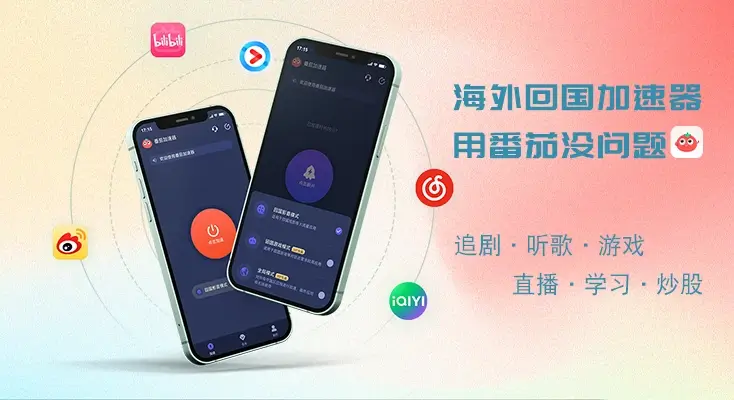
Going back to the original question: Is 网易云加速器 free a good option? For casual use, yes, but if you need consistent performance, you’ll want to upgrade or switch to a better service. When comparing 斧牛 vs. 畅游 or 雷神 vs. 云帆, it all comes down to your specific needs. But for most overseas users—whether you’re a student, a worker, or a gamer—Tomato Accelerator is the all-in-one solution that covers everything. It’s helped me stay connected to home, stream my favorite shows, and play games with friends without any hassle. Give it a try—you won’t be disappointed.